Category: Bible Study

  • Mark Series Part 2: John The Baptist Prepares the way

    Mark Series Part 2: John The Baptist Prepares the way

    This is a bible study and expository practice for the gospel of Mark. The goal is grab onto the deeper details of the gospel and give a second look at details that are usually overlooked. Please feel free to put your own insights in the comments below.

    1:1-8

    • Verse 1 – The beginning of the gospel of Jesus Christ, the Son of God.

    The opening of the Mark’s gospel account starts with a proclamation of an important truth of the message. The gospel is of and from Jesus Christ, the Son of God. This is noticeably different from the openings of the other gospels. Matthew and Luke explore Jesus’ lineage. John provides a theological opening.
    This could give credence to the idea that Mark was writing to a population of people outside of the Palestine region; Because, the genealogies and deep theological discussion may not effectively communicate the gospel to those unfamiliar with the Hebrew/Christian faith.

    • Verse 2 – As it is written in Isaiah the prophet, “Behold, I send my messenger before your face who will prepare your way,
    • Verse 3 – the voice of one crying in the wilderness: ‘Prepare the way of the Lord, make his paths straight,’”

    Mark attributes his words and Jesus’ coming to Isaiah but his quote is actually scripture stitched together from Malachi, exodus, and Isaiah. What I’ve read from theologians is that this is not an uncommon practice in ancient Jewish writing.

    What is happening here is that Mark is using the prominent theme from Isaiah to communicate the messianic nature of Jesus’ gospel. I have also heard that ancient Jewish writing commonly referred to the prophets as “Isaiah” as a form of shorthand or tradition.
    Later, scribes observed this and made an editorial decision to bring clarity to this issue and began using the phrase, “The Prophets”, instead of simply Isaiah. This change is observable in translations such as the KJV. I would assume the same is true of other translations utilizing the Textus Receptus.
    The modern use of older Greek texts in today’s translations results in many modern translations going back to saying, “Isaiah”.

    • Verse 4 – John appeared, baptizing in the wilderness and proclaiming a baptism of repentance for the forgiveness of sins.

    The baptism that John proclaimed was one of repentance in water. He proclaimed the forgiveness of sins to those who would respond to his message and be baptized.
    This further fulfills the themes of repentance in Isaiah.

    • Verse 5 – And all the country of Judea and all Jerusalem were going out to him and were being baptized by him in the river Jordan, confessing their sins

    People from the surrounding region heard of John and were filled with conviction enough to be baptized in the Jordan River.
    This appears to be the fulfillment of the prominent theme from the second part of Isaiah (40-55) where a new exodus is described that gathers God’s people to the promised land.

    • Verse 6 – Now John was clothed with camel’s hair and wore a leather belt around his waist and ate locusts and wild honey.

    John’s unusual appearance is noted here and actually resembles Elijah’s appearance. Jesus later identifies John as Elijah and as the fulfillment of the prophecy that Elijah would come before the messiah.
    This is how verse 4,5, and 6 fulfill the prophecy of verse 2 and 3. This is coherent messianic theology hidden in language meant to communicate the gospel to outsiders.

    • Verse 7 – And he preached, saying, “After me comes he who is mightier than I, the strap of whose sandals I am not worthy to stoop down and untie.

    This is John, “making way” for Jesus. He is Elijah proclaiming the coming of the messiah.
    Untying the straps of sandals could be the responsibility of a low servant. A Jew proclaiming this status of another is an incredible exclamation.
    John is emphasizing the importance of Jesus’ nature, not only as another prophet to come, but someone even greater.

    • Verse 8 – I have baptized you with water, but he will baptize you with the Holy Spirit.” Jesus’ salvific work and the establishment of a new covenant are proclaimed.

    Conclusion

    While Mark’s account of the gospel does not immediately have the most front-facing theological approach, there is much more beneath the surface. The opening of the first chapter is full of the Lordship of Christ and the fulfillment of messianic prophecies.

    The next article will cover the baptism of Jesus, the implications of His baptism, and the trinity. It may be a smaller section of scripture, but we’ll see what I can squeeze in.

  • Mark Series: Part 1 – Background

    Mark Series: Part 1 – Background

  • Verse by Verse: Matthew’s Genealogy of Jesus Explained

    Verse by Verse: Matthew’s Genealogy of Jesus Explained

    Background

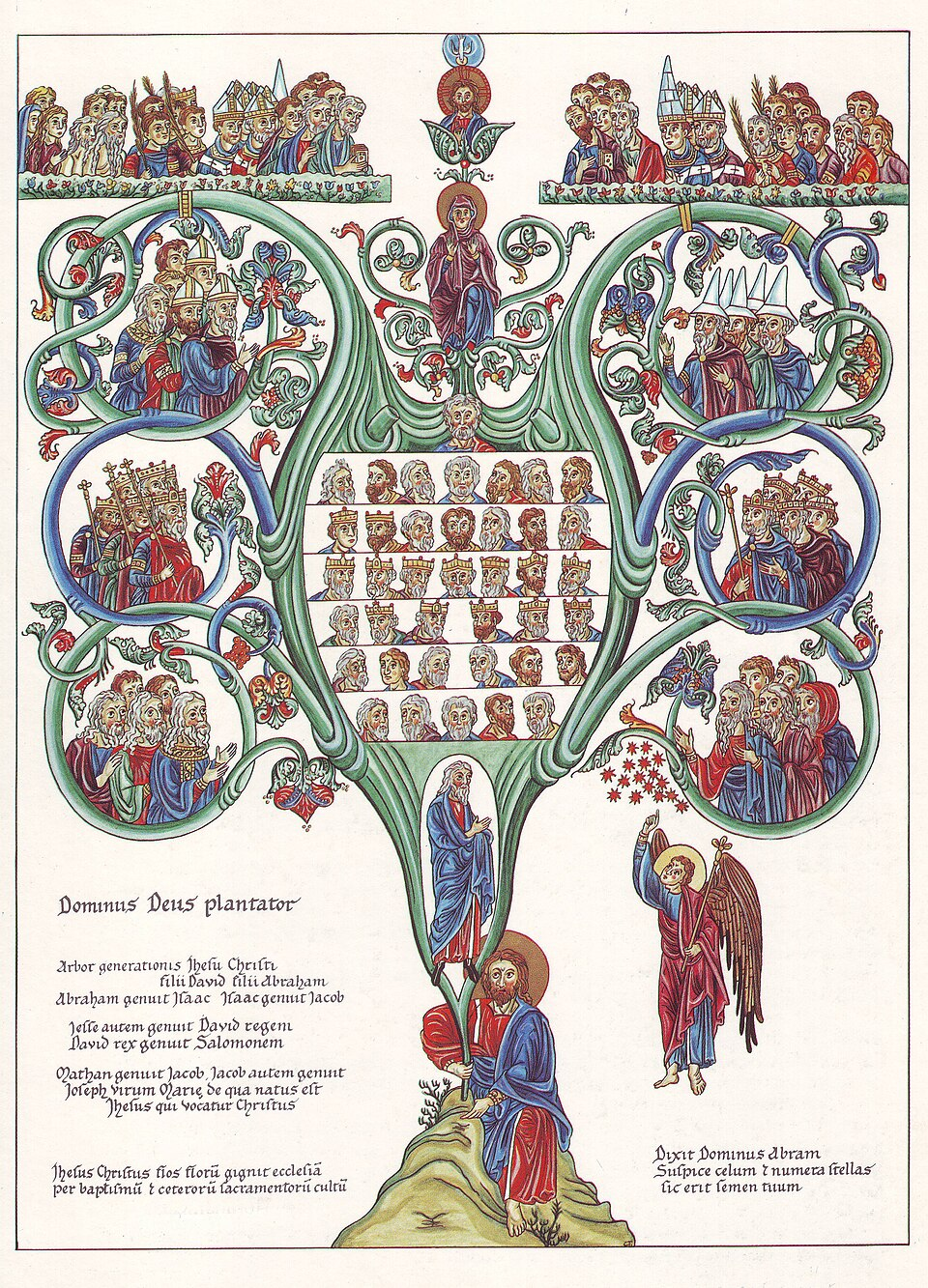
    Matthew, also known as Levi and the son of Alphaeus, was a tax collector in Capernaum, Galilee, during the first century AD. Being a tax collector was a profession that was highly despised in ancient Judaism due to its association with Roman rule and corruption. Matthew is considered the second oldest account of the gospel of Jesus Christ but is placed first in the traditional order of the new testament canon. This tradition dates very far back as early Christian writers of approx. 2nd-3rd century.

    Matthew’s purpose was writing to the Jewish community to demonstrate Jesus as the Jewish messiah of the prophecies of the Old Testament. That being his goal, we can observe Matthew often references old testament prophecy, Jewish customs, and even leaves some Aramaic words untranslated. If you don’t know, Aramaic is a Semitic language similar to Hebrew, which would be difficult for the Roman reader to understand, demonstrating Matthew’s intended audience being the Jewish reader.

    The Genealogy Discrepancy:

    There is a discussion that has been resolved long before this study was done but will be restated to clear any confusion. When reading Jesus’ genealogy in the gospels according to Matthew and Luke, one can run into the fact that they are not the same list.

    This discrepancy can make studying this genealogy difficult for some. But when studying a text, one has to ask what the purpose is for the author’s writing. We have already established that Matthew is seeking to prove that Jesus is the Jewish Messiah, and so accordingly he writes his genealogy, not exhaustively but to highlight key figures to prove his point (From what I have read was a common practice of the time).

    It is observed that Matthew reports the paternal lineage of descent from after Solomon to Joseph, where Luke reported the material line through Solomon’s brother, Nathan to Mary. The two lines converse with the intermarriage of Shealtiel and Zerubbabel, Rhesa and Abiud, and finally Joseph and Mary.

    This study looks at unpacking Matthew’s account with verse by verse examination from the Greek text.

    Ultimately, the intended message to be communicated here is Jesus’ legal right to the throne of David via blood lineage.

    The Genealogy of Jesus Christ According to Matthew

    Verse 1 – The book of the genealogy of Jesus Christ, the son of David, the son of 

    (Biblos)     (genesis) (iēsou) (christos) (huios) (dabid) (huios)

    Abraham.

    (abraam)

    • Term breakdown –
      • Biblos (The inner bark of the papyrus plant, implying a sheet or scroll of writing.) 
      • genesis (following the origin, implying lineage) 
      • iēsous (Jesus or Joshua in greek, meaning “The Lord is Salvation”) 
      • christos (Christ, Anointed, an epithet of the messiah) 
      • huios (a son, contextually used as son of a male figure or meaning son of man)
    • Explanation – According to the study material, the opening can can literally be translated as “record of genealogy” or  “record of the origins”. This text is the opening to Matthew’s account of the gospel, opening with fulfillment of messianic prophecy in being the descendent of David and Abraham. (2Sa 7:13, 2Sa7:16, PSa89:36, Psa 132:11, Isa 9:6,7; Isa 11:1; Jer 23:5; Jer 33:15-17,26; Amo 9:11; Zec 12:8; Gen 12:3; Gen 22:18; Gen 26:3-5; Gen 28:13,14). Biblos here refers to a scroll or the paper that this was written upon as a book or “codex”, while adopted by christians very early, was not adopted in the early first century.

    Verse 2 Abraham was the father of Isaac, and Isaac the father of Jacob, and Jacob 

    (Abraam) (gennaō) (ho) (isaak)        (isaak) (de) (gennaō) (ho) (iakōb) (iakōb)

    the father of Judah and his brothers, 

    (de)(gennaō)(ho)(ioudas)(kai)(ho)(adelphos)(autos)

    Verse 3 and Judah the father of Perez and Zerah by Tamar, and Perez the father of 

    (ioudas) (gennaō) (phares)(kai)(zara)(ek)(thamar)  (phares) (gennaō)

    Hezron, and Hezron the father of Ram,

    (hesrōm) (de) (hesrōm) (gennaō) (aram)

    • Term Breakdown
      • Gennaō ( A man who fathered, begat, bring forth, or to be born, or begotten/woman giving birth to children)
      • Autos (personal possession – his/her, reflexive pronoun – self)
      • Adelphos (Brother, sharing a single parent or both parents)
    • Explanation
      • This lineage is used as prophetic proof of Jesus being the jewish messiah, demonstrating that Jesus is the descendent of Abraham, (Gen. 12:3), the first “jew who fathered Isaac and grandfathered the sons that give the tribes their namesake  (Gen. 26:3,4; 35:11,12) Followed by the fulfillment of messianic prophecy via descending from the tribe of Judah (Gen. 49:10)

    Verse 4 and Ram the father of Amminadab, and Amminadab the father of Nahshon, 

    (aram) (gennaō) (aminadab) (aminadab)       (gennaō) (naassōn)

    and Nahshon the father of Salmon, 

    (de) (naassōn) (gennaō) (salmōn)

    Verse 5 and Salmon the father of Boaz by Rahab, and Boaz the father of Obed by 

    (salmōn) (gennaō) (boes) (ek) (rachab) (boes) (gennaō) (iōbēd) (ek) 

    Ruth, and Obed the father of Jesse, 

    (routh) (de) (iōbēd) (gennaō) (iessai) 

    Verse 6 and Jesse the father of David the king. And David was the father of Solomon 

    (iessai) (gennaō) (dabid)(ho)(basileus)(dabid) (gennaō)(solomōn) 

    by the wife of Uriah. 

    (ek) (ho) (ourias)

    • Explanation –  “By the wife of Uriah”, this is Bathsheba, who is excluded by name, possibly due to the sins surrounding the joining of David and Bathsheba.

    Verse 7 and Solomon the father of Rehoboam, and Rehoboam the father of Abijah, 

    (solomōn) (gennaō) (roboam) (roboam) (gennaō) (abia)

    and Abijah the father of Asaph, 

    (de) (abia)   (gennaō) (asa)

    • Term breakdown
      • Basileus (king)
    • Explanation – This is yet another example of Jesus fulfilling the messianic prophecies descending through Jesse (Isaiah 11) and line of Dave(2 Sam. 7:12). But also other key biblical figures as other proofs for consistency throughout the kingly lineage of David. Beyond understanding this as a kingly lineage of Israel, to understand this greater would require one to read through the OT historical books such as 1 & 2 Sam, 1 & 2 Kings, and 1 & 2 Chronicles to understand the nuances of the stories of each king and their standing with God. 

    Verse 8 and Asaph the father of Jehoshaphat, and Jehoshaphat the father of Joram,

    (Asa) (gennaō) (iōsaphat) (iōsaphat) (gennaō) (iōram)

    and Joram the father of Uzziah,

    (de) (iōram) (gennaō) (ozias)

    • “Joram begot Uzziah.” This is an example of Matthew skipping some generations. There were three kings between these two, but Matthew specifically chose to introduce these two. Perhaps because of Uzziah’s stature of being one of the good kings of Israel who did not lead their nation into sin.

    Verse 9 and Uzziah the father of Jotham, and Jotham the father of Ahaz, and Ahaz

    (ozias)     (gennaō) (iōatham) (iōatham) (gennaō)(achaz)(de)(achaz)

    the father of Hezekiah, 

    (gennaō) (hezekias )

    Verse 10 and Hezekiah the father of Manasseh, and Manasseh the father of Amos, 

    (Hezekias) (gennaō) (manassēs) (manassēs) (gennaō) (amōs) 

    and Amos the father of Josiah, 

     (de) (amōs) (gennaō) (iōsias)

    Verse 11 and Josiah the father of Jechoniah and his brothers, at the time of the

    (iōsias)      (gennaō) (iechonias) (kai)(autos)(adelphos)(epi) (ho)

    deportation to Babylon.

      (metoikesia) (babylōn)

    Verse 12 And after the deportation to Babylon: Jechoniah was the father of Shealtiel,

    (meta)(ho)(metoikesia) (babylōn) (iechonias) (gennaō)(salathiēl)

     and Shealtiel the father of Zerubbabel, 

    (de) (salathiēl) (gennaō) (zorobabel) 

    • Jehoakim, son of Josiah is notably and controversially excluded from the genealogy. The easy is that he was an evil king with his deeds recorded in 2 chronicles. However in that verse there is a curse against him and his offspring sitting on the throne. Jeconiah, son of Jehoakim sat on the throne, however only for three months. However, this would potentially pose a problem for the messianic inheritance of David’s throne. However, this is interestingly resolved through the virgin birth. Joseph, not Mary, was descended from Jehoakim. So while legally Jesus was Joseph’s son, he was not his son by blood, thereby side-stepping the curse while also fulfilling the davidic covenant.

    Verse 13 and Zerubbabel the father of Abiud, and Abiud the father of Eliakim, and 

    (zorobabel) (gennaō) (abioud) (abioud)(gennaō)(eliakeim)(de) 

    Eliakim the father of Azor, 

    (eliakeim) (gennaō) (azōr) 

    Verse 14 and Azor the father of Zadok, and Zadok the father of Achim, and Achim

    (Azōr) (gennaō) (sadōk) (sadōk) (gennaō) (Acheim) (de) (Acheim)

     the father of Eliud, 

    (gennaō)(elioud)

    Verse 15 and Eliud the father of Eleazar, and Eleazar the father of Matthan, and 

    (Elioud)   (gennaō) (eleazar) (eleazar) (gennaō)  (matthan) (de)

    Matthan the father of Jacob, 

    (Matthan) (gennaō) (iakōb)

    • Term Breakdown
      • Metoikesia (deportation – to remove from one abode to another)

    Verse 16 and Jacob the father of Joseph the husband of Mary, of whom Jesus was 

    (iakōb) (gennaō) (iōsēph) (ho) (anēr) (maria) (ek) (hos) (iēsous) 

    born, who is called Christ.

    (gennaō)(ho)(legō)(christos)

    • Term Breakdown
      • Legō (is called, or to call by name)
    • Explanation – Matthew is careful to say that Joseph is the “Husband of Mary” rather than Father to Jesus. This points to Jesus’ legal ancestry rather than physical descent. Gennaō is used here to say “Jesus was born of Mary” rather than “Joseph was the father of” like in the earlier verses.

    Verse 17 So all the generations from Abraham to David were fourteen 

    (oun)(pas)(ho)(genea) (apo)(abraam)(heōs)(dabid)(dekatessares)

    generations, and from David to the deportation to Babylon fourteen generations, 

    (Genea) (apo) (dabid) (heōs) (ho) (metoikesia) (babylōn) (dekatessares) (genea)

    and from the deportation to Babylon to the Christ fourteen generations.

    (Kai)(apo)(ho)(metoikesia) (babylōn)(heōs)(ho)(christos)(dekatessares)(genea)

    • Term breakdown
      • Genea (Generation – ranks of descent, members of a genealogy/family, or an age a space of 30-33 years)
    • Explanation
      • Some observe that some generations were skipped which was not uncommon in the jewish world of genealogies.