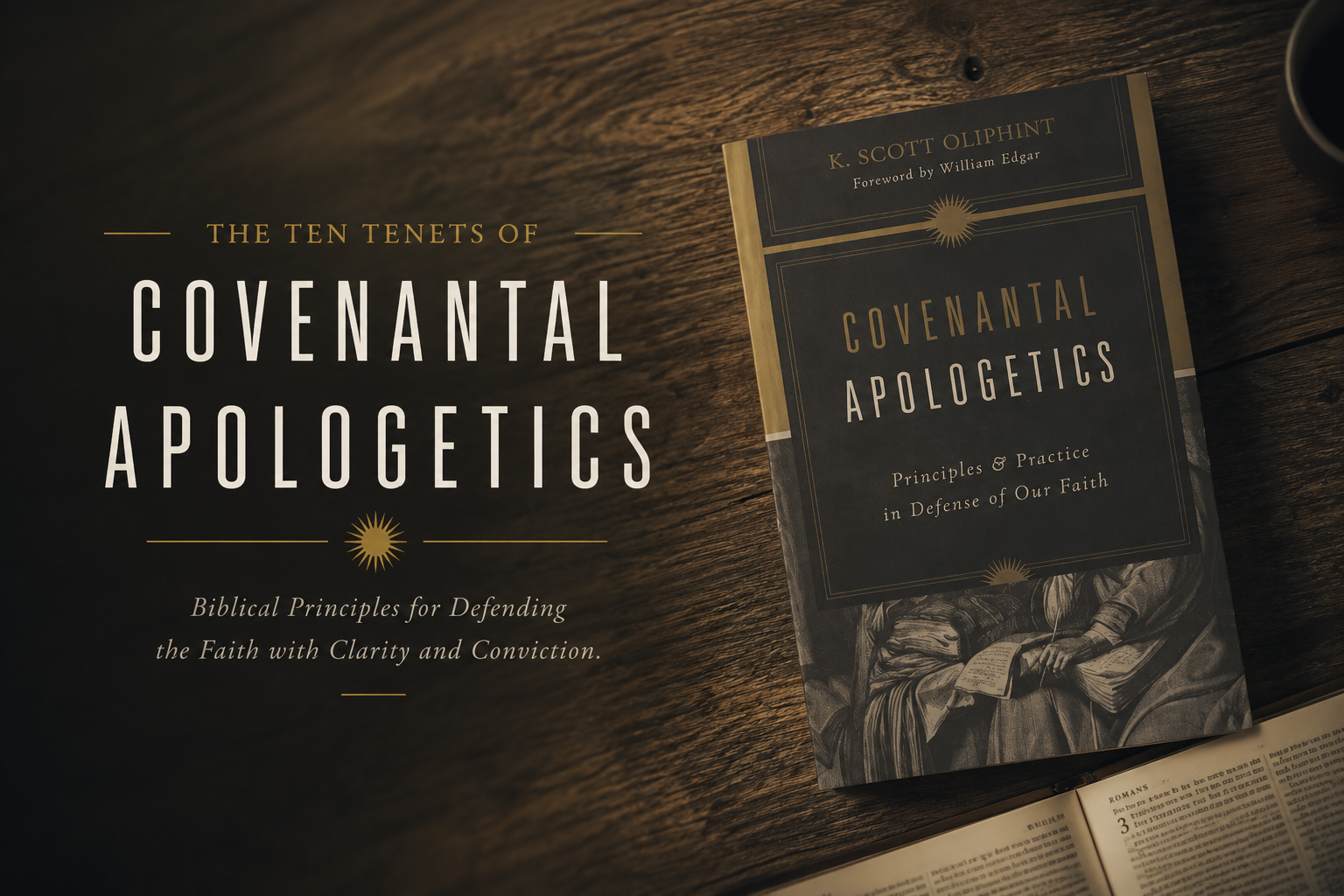
Note To Reader: These are notes and excerpts from Covenantal Apologetics by K. Scott Oliphint.
Presuppositional Apologetics is the system and even art of defending our faith. Covenantal Apologetics by K. Scott Oliphint was the first book on theology I had ever read. When I first read the book, I didn’t quite grasp all of the concepts. But I knew that it was rich value to me. Earlier this year, I reread this book with a stronger understanding of apologetics and the biblical worldview and was pleasantly surprised to find that it was still edifying for me ten years later.
If you are new to apologetics, read these 10 tenets and take them to heart. If you have a background in this area, I hope this is still enriching for you.
- The faith that we are defending must begin with, and necessarily include, the triune God- Father, Son, and Holy Spirit-who, as God, condescends to create and to redeem
- Generic theism has no part of the Christian faith.
- The Trinity is such an inherit characteristic of God, The starting place must be at the triune God as a presupposition.
- God’s covenantal revelation is authoritative by virtue of what it is, and any covenantal, Christian apologetic will necessarily stand on and utilize that authority in order to defend Christianity.
- God’s revelation is covenantal because it initiates a relationship between God and humanity.
- The authority of scripture is taken as the word of God.
- It is the truth of God’s revelation, together with the work of the Holy Spirit, that brings about a covenantal change from one who is in Adam to one who is in Christ.
- We are required to communicate God’s truth when defending the Christian faith.
- Apologetics proclaims truth, but regeneration remains sovereign.
- Avoid rationalism (truth alone)
- Avoid mysticism (Spirit apart from truth)
- Testimonium Spiritus Sancti Internum or Internal Witness of the Holy Spirit asserts that the authority of Scripture is self-authenticating and established not by human reason, church tradition, or external proofs, but by the inward work of the Holy Spirit in the believer’s heart.
- Man as image of God is in covenant with the triune God for eternity.
- Every person is made in the image of God and is therefore responsible to God for everything that they do and are therefore in covenant with God for eternity.
- Every person in covenant with God lives coram Deo, that is, before the face of God.
- All people are in covenant with God as image-bearers, though only believers are in the covenant of grace.
- It is by this truth, that we are responsible for our confession on the day of judgement.
- All people know the true God, and that knowledge entails covenantal obligations
- Romans 1:18-20 – All people inherently know God because God makes himself known by virtue of his own revelatory activity.
- Those who are and continue to remain in Adam suppress the truth that they know. Those who are in Christ see that truth for what it is.
- There is an absolute, covenantal antithesis between Christian theism and any other, opposing position. Thus, Christianity is true and anything opposing it is false.
- The antithesis is ethical and covenantal, not merely logical.
- Suppression of the truth, like the depravity of sin, is total but not absolute. Thus, every unbelieving position will necessarily have within it ideas, concepts, notions, and the like that it has taken and wrenched from their true, Christian context.
- All men are affected by sin (Total Depravity) but is not absolute as in absolute depravity.
- Sin affects every faculty
- But does not eliminate all truth, goodness, or rationalityl
- The true, covenantal knowledge of God in man, together with God’s universal mercy, allows for persuasion in apologetics.
- Every fact and experience is what it is by virtue of the covenantal, all controlling plan and purpose of God.
Leave a Reply